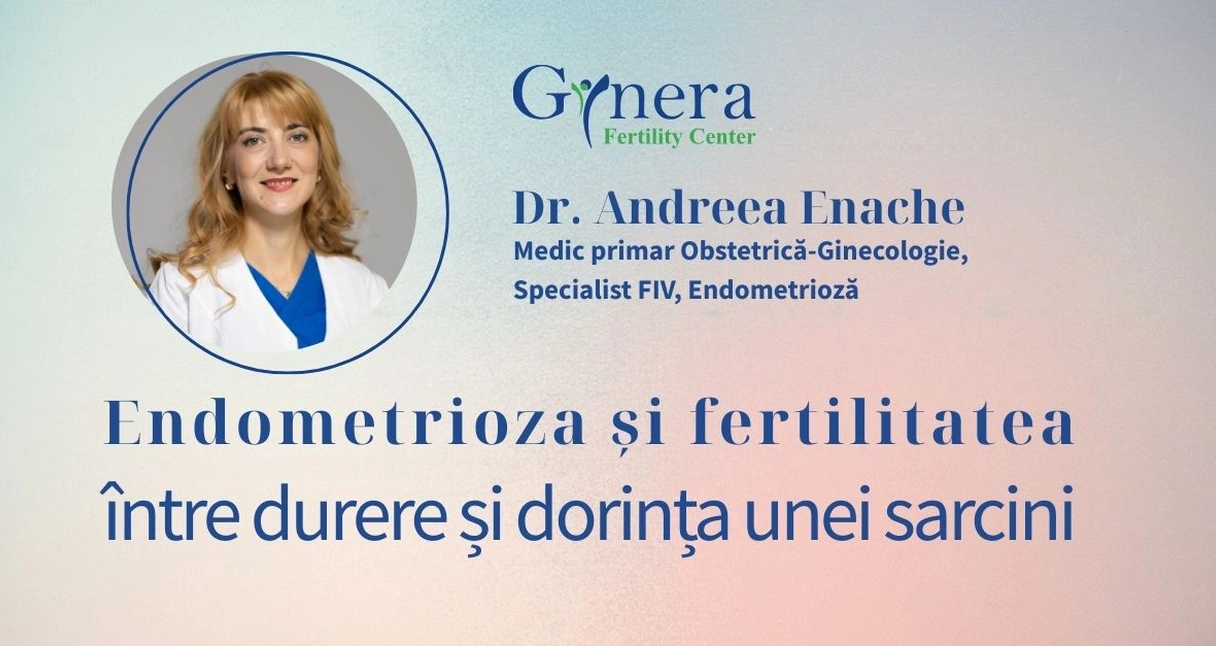
For many women diagnosed with endometriosis, the condition is not only about pain. It often represents a difficult balance between two fundamental needs: living without pain and the deep desire to become a mother.
In clinical practice, this internal conflict is common. Some patients seek medical help due to severe pain affecting their daily lives, while others present with difficulty conceiving. In most cases, however, both issues coexist.
When managing a patient with endometriosis, one of the most important questions is not just which treatment to choose, but what the priority is at that stage of life: pain control or achieving pregnancy.
Why does endometriosis affect fertility?
Endometriosis impacts fertility through more than just anatomical changes.
In advanced stages, the mechanisms are clear:
- pelvic adhesions
- damaged fallopian tubes
- ovarian cysts (endometriomas)
These can physically prevent the egg and sperm from meeting.
However, even in mild forms, fertility may be affected through more subtle mechanisms:
- chronic pelvic inflammation
- impaired egg quality
- altered immune environment
- reduced endometrial receptivity
- impaired tubal function
It is estimated that 30–50% of women with endometriosis experience infertility, while 25–50% of women evaluated for infertility are diagnosed with endometriosis, often discovered only during fertility investigations.
The role of the physician: identifying priorities
A key part of management is understanding:
- What is the dominant symptom?
- What is the patient’s main need at this moment?
- Is the priority pain control or achieving pregnancy?
The answers to these questions can completely change the treatment strategy.
When pain becomes the priority
For some patients, pain significantly impacts quality of life and becomes the main concern. In severe cases, such as intestinal endometriosis, symptoms may be underestimated but can lead to serious complications, including bowel obstruction. In these situations, surgery may be necessary. A critical aspect is preserving ovarian reserve during surgical intervention.
When pregnancy becomes the priority
For many women, achieving pregnancy becomes the primary goal. In these cases, time and age are critical factors.
Fertility evaluation should be systematic and include:
- detailed medical history
- partner evaluation (sperm analysis, DNA fragmentation test)
- fallopian tube assessment
- ovarian reserve and hormonal profile
- transvaginal ultrasound for endometriosis lesions
If additional factors reduce the chances of conception and cannot be quickly corrected, IVF may be the most effective option.
Endometriosis and ovarian reserve
This is often underestimated.
Endometriosis may be associated with reduced ovarian reserve, even at younger ages. Ovarian cysts and repeated surgeries can further damage ovarian tissue.
Evaluation includes:
- AMH testing
- antral follicle count
- reproductive history
These findings can significantly influence treatment decisions.
Bibliography:
2022 ESHRE Endometriosis Guideline Development Group
Bulletti C. Endometriosis and infertility.
Human Reproduction / Oxford Academic (revizuiri științifice). La Marca A. Fertility preservation in women with endometriosis. Human Reproduction Open.
American Society for Reproductive Medicine (ASRM). Practice Committee of the American Society for Reproductive Medicine. Endometriosis and infertility

Dr. Andreea Enache
Primary Obstetrics-Gynecology Doctor, Specialist in Assisted Human Reproduction, Doctor of Medical Sciences, Specialization within the "European Master Class" in Endometriosis, Member of ESHRE, Expertise: hysteroscopy, obstetric & gynecological ultrasoundEndometriosis
A condition in which tissue similar to the uterine lining grows outside the uterus. It may cause inflammation, pelvic pain, adhesions, ovarian cysts and fertility problems.
Endometrioma
An ovarian cyst associated with endometriosis. Endometriomas may affect healthy ovarian tissue and reduce ovarian reserve.
Pelvic adhesions
Bands of scar tissue that can cause pelvic organs to stick together. They may affect the ovaries or fallopian tubes and make natural conception more difficult.
Ovarian reserve
An indication of the number of eggs remaining in the ovaries and their expected response to ovarian stimulation. It is commonly assessed using AMH testing and antral follicle count.
AMH (Anti-Müllerian Hormone)
A hormone used as a marker of ovarian reserve. AMH levels can help estimate how the ovaries may respond to fertility treatment.
Antral follicle count (AFC)
The number of small follicles visible in the ovaries during a transvaginal ultrasound. It helps assess ovarian reserve and plan ovarian stimulation.
Endometrial receptivity
The ability of the uterine lining to support embryo attachment and implantation during the appropriate stage of the menstrual cycle.
Transvaginal ultrasound
An imaging examination performed using an ultrasound probe inserted into the vagina. It allows detailed evaluation of the uterus, ovaries and possible endometriosis lesions.
Sclerotherapy
A minimally invasive procedure in which the contents of an endometrioma are drained and a substance is introduced to reduce the likelihood of the cyst returning.
Adenomyosis
A condition in which tissue similar to the uterine lining grows within the muscular wall of the uterus. It may cause pain, heavy menstrual bleeding and reduced embryo implantation.
Chronic endometritis
Persistent inflammation of the uterine lining, usually associated with infection. It may affect endometrial receptivity and embryo implantation.
IVF (In Vitro Fertilization)
A fertility treatment in which eggs are fertilized with sperm in a laboratory before an embryo is transferred into the uterus.
Fertility preservation
Methods used to preserve reproductive potential for the future, including egg, sperm or embryo freezing.
Oocyte cryopreservation (egg freezing)
A fertility-preservation procedure in which mature eggs are collected, frozen and stored for possible future use.