Adenomyosis and Infertility: How It Affects Fertility and IVF Success
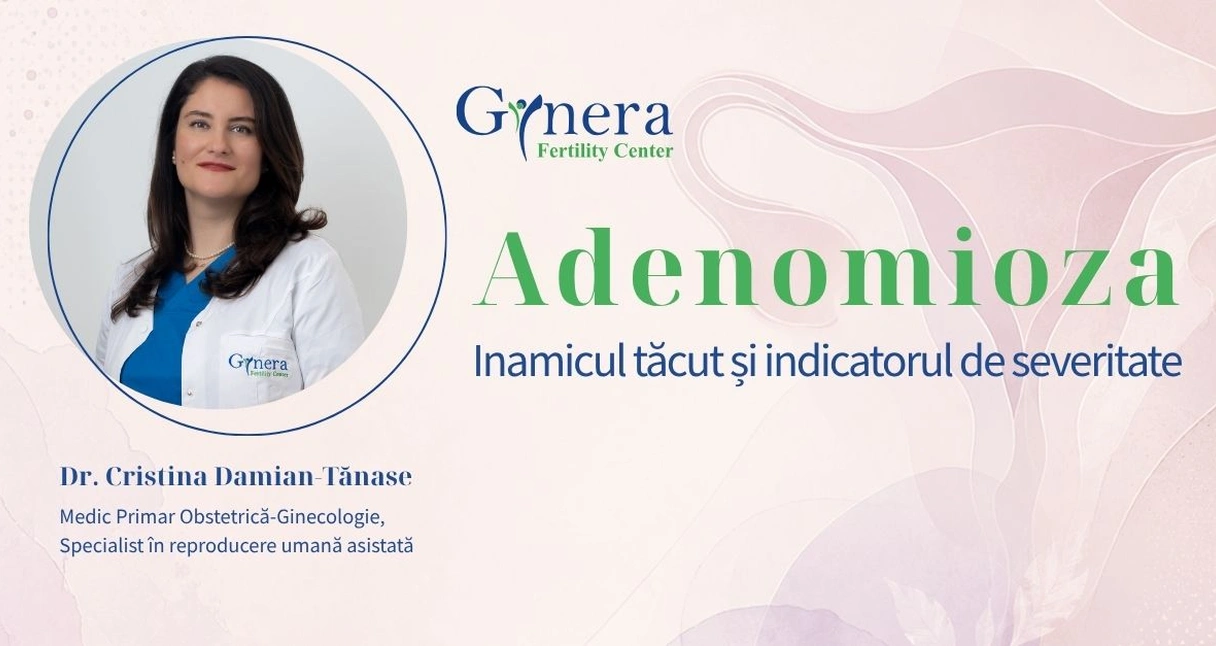
Adenomyosis is one of the most common benign uterine disorders affecting women of reproductive age and an important, yet frequently underdiagnosed, cause of infertility. From chronic inflammation and uterine structural changes to impaired endometrial receptivity and reduced embryo implantation rates, adenomyosis can significantly impact both natural conception and IVF outcomes. In this article, Dr. Cristina Tănase-Damian explains the mechanisms through which adenomyosis affects fertility, reviews the latest diagnostic techniques, and discusses evidence-based treatment strategies designed to improve reproductive outcomes.
Adenomyosis is a benign uterine disorder commonly affecting women of reproductive age (30–40 years old) and is one of the leading causes of chronic pelvic pain, abnormal uterine bleeding, and infertility. The term adenomyosis originates from the Greek words aden (gland) andmys (muscle), literally referring to the presence of glandular tissue within the uterine muscle. Although the condition was first described in 1925, its current definition was established in 1972 and refers to the benign invasion of endometrial tissue into the myometrium, resulting in an enlarged uterus.
For many years, adenomyosis was considered a disease affecting mainly women over the age of 40 with multiple previous pregnancies and was usually diagnosed only after hysterectomy. Today, however, advances in imaging techniques allow us to diagnose the condition without resorting to radical surgical procedures.
Currently, transvaginal ultrasound (TVS) is the first-line imaging modality for diagnosing adenomyosis, particularly three-dimensional transvaginal ultrasound (3D-TVS). Compared with conventional two-dimensional ultrasound (2D), 3D imaging significantly improves diagnostic accuracy by allowing detailed visualization of changes in the endometrial–myometrial junctional zone (JZ).
In 2015, the international Morphological Uterus Sonographic Assessment (MUSA) group published the first consensus defining the standardized ultrasound terminology for adenomyosis. Four years later, MUSA introduced a uniform classification and reporting system designed to describe the morphological variations and extent of adenomyosis during ultrasound evaluation, with the primary goal of reducing diagnostic subjectivity.
In the era of precision medicine, standardizing 3D ultrasound criteria and recognizing adenomyosis at an early stage are essential for transforming diagnostic uncertainty into effective clinical decision-making, offering new hope to women wishing to conceive. Adenomyosis can also be diagnosed using magnetic resonance imaging (MRI), while hysteroscopy may reveal characteristic intrauterine lesions associated with the disease.
How does adenomyosis affect fertility?
Today, adenomyosis is recognized as an estrogen-dependent disease, characterized by the presence of endometrial tissue extending at least 2.5 mm into the myometrium. This abnormal infiltration distorts the normal uterine architecture and alters the junctional zone (JZ), which can be clearly visualized on 3D ultrasound as irregular or interrupted lines. The junctional zone plays a critical role in regulating uterine peristalsis. When affected by adenomyosis, several mechanisms may compromise fertility:
- Increased local inflammation that interferes with decidualization
- Progesterone resistance
- Abnormal uterine contractions that impair embryo implantation
- Abnormal placental implantation associated with adverse fetal outcomes
Depending on the distribution of lesions within the myometrium, adenomyosis may be classified as:
- Focal
- Diffuse
- Cystic (adenomyoma)
This variability often makes diagnosis challenging, particularly because adenomyosis frequently coexists with or resembles endometriosis and uterine fibroids. Typical ultrasound findings include:
- Asymmetrical thickening of the uterine walls
- Hyperplastic adenomyotic islands
- Distortion of the endometrial–myometrial junction
- Multiple myometrial vascular lacunae
Clinical presentation
The most common symptoms reported by patients include:
- Chronic pelvic pain
- Pain during sexual intercourse (dyspareunia)
- Heavy and painful menstrual bleeding
- Abnormal uterine bleeding
- Infertility
However, some women remain completely asymptomatic despite having extensive disease.
How is adenomyosis treated?
Adenomyosis has attracted increasing attention due to its high prevalence among women of reproductive age and its significant impact on pregnancy outcomes, including pregnancies achieved through assisted reproductive technologies (IVF). Despite considerable advances in research, both the pathogenesis and etiology of adenomyosis remain only partially understood. Conventional treatment strategies primarily focus on pain management or surgical intervention, often leaving fertility-preserving options insufficiently addressed. This highlights the need for continued research and more personalized therapeutic approaches.
As with endometriosis, treatment should always be individualized according to:
- The patient's age
- Her reproductive goals
- Symptom severity
- Pain management requirements
Treatment options
Current treatment strategies include:
- Hormonal therapy, such as GnRH agonists, progestins, GnRH antagonists, selective progesterone receptor modulators, and the levonorgestrel-releasing intrauterine device (Mirena®). These treatments aim to temporarily suppress estrogen production, reduce pain, and improve fertility.
- Non-steroidal anti-inflammatory drugs (NSAIDs) for pain relief, although they are not suitable for long-term use.
- Operative hysteroscopy, which may allow the resection of selected focal or cystic adenomyotic lesions.
- Pelvic surgery, either conservative (adenomyomectomy) or radical (hysterectomy). However, not every form of adenomyosis requires surgery. Surgical indications must be carefully established because adenomyosis has a high recurrence rate and surgery itself creates uterine scar tissue. Only appropriately selected patients are likely to benefit from surgical intervention.
Hysterectomy (removal of the uterus) is reserved exclusively for symptomatic women who have completed childbearing and no longer wish to conceive.
Adenomyosis, fertility and assisted reproductive technologies
Several mechanisms explain how adenomyosis may impair fertility and reduce the chances of achieving pregnancy:
- Distortion of the uterine muscle architecture, creating a uterine environment that is less receptive to embryo implantation.
- Heavy menstrual bleeding, which may lead to iron-deficiency anemia, poor tissue oxygenation, fatigue, pallor, and generalized weakness.
- Chronic pelvic pain, frequently associated with irritability, fatigue, anxiety, depression, and reduced quality of life.
- Pain during sexual intercourse (dyspareunia), which often results in decreased libido and less frequent intercourse, further reducing the chances of natural conception.
Why does adenomyosis affect IVF success?
Simply put, adenomyosis is a complex, multifactorial disease characterized by a highly inflammatory and hormone-rich uterine environment that negatively affects both natural fertility and IVF success rates.
The development of adenomyotic lesions leads to poor tissue vascularization (hypoxia), increased production of inflammatory cytokines, and elevated local estrogen synthesis. This disrupts the balance between inflammatory mediators and sex hormones, resulting in abnormal activation and accumulation of immune cells.
An overactive immune system may eventually become dysregulated, promoting fibrosis, abnormal angiogenesis, and impaired endometrial receptivity. Estrogen further amplifies these pathological mechanisms. In addition to elevated estrogen levels, oxidative stress is believed to play a central role in the immune dysfunction associated with adenomyosis.
Both excessive immune activation and inadequate immune tolerance within the endometrial microenvironment may compromise maternal immune tolerance. These alterations not only reduce endometrial receptivity but also increase the local production of prostaglandin F2α (PGF2α), leading to excessive uterine contractility. Abnormal uterine contractions and ultrastructural endometrial changes may interfere with the transport of both gametes (oocytes and sperm) and embryos, reducing the likelihood of successful implantation. Hypoxia and oxidative stress may also impair endometrial angiogenesis, resulting in fragile, highly permeable blood vessels and abnormal placentation, ultimately creating a less favorable environment for embryo implantation and fetal development.
Future therapeutic perspectives
Current treatments for adenomyosis, including GnRH agonists (GnRHa), primarily focus on hormonal suppression. However, emerging evidence suggests that combining hormonal therapy with immune modulation could further improve reproductive outcomes by simultaneously targeting both hormonal imbalance and immune dysfunction. Although these strategies appear promising, robust preclinical and clinical studies are still needed to validate their long-term efficacy and safety.
Conclusion
The relationship between adenomyosis and infertility is complex and multifactorial. Continued advances in diagnostic techniques and therapeutic strategies remain essential, but an even deeper understanding of the disease's pathophysiology is equally important.
Most importantly, early diagnosis and accurate recognition of adenomyotic lesions are key to improving reproductive outcomes. This requires the systematic application of internationally accepted ultrasound diagnostic criteria in everyday clinical practice, allowing women to receive timely, individualized treatment and maximize their chances of achieving a healthy pregnancy.

Dr. Cristina Damian-Tănase
Primary Obstetrics-Gynecology, Specialist in assisted human reproduction, Doctor of Medical Sciences, ESHRE Member, ISUOG Member, Specialization in Centre Hospitalier Rene Dubos in France and in Louvain University Clinic, BelgiumAdenomyosis
A benign uterine condition in which tissue similar to the endometrium grows into the muscular wall of the uterus. It may cause pelvic pain, heavy menstrual bleeding, infertility, and reduced embryo implantation rates.
Endometrium
The tissue lining the inside of the uterus. During the menstrual cycle, it prepares for the implantation of an embryo.
Myometrium
The muscular layer of the uterus. In adenomyosis, endometrial-like tissue grows within this layer.
Junctional zone (JZ)
The area between the endometrium and myometrium. Changes in its thickness or structure may be associated with adenomyosis and abnormal uterine contractions.
Endometrial receptivity
The ability of the uterine lining to support embryo attachment and implantation during the appropriate stage of the menstrual cycle.
Decidualization
The process through which the endometrium undergoes changes that prepare it to support embryo implantation and early pregnancy.
Transvaginal ultrasound (TVS)
An imaging examination that uses an ultrasound probe inserted into the vagina to assess the uterus, ovaries, and other pelvic structures.
Magnetic resonance imaging (MRI)
An imaging technique that produces detailed pictures of the uterus and may be used to assess the location and extent of adenomyosis.
Adenomyoma
A focal form of adenomyosis in which endometrial-like tissue forms a localized mass within the uterine muscle.
Adenomyomectomy
A fertility-preserving surgical procedure in which localized adenomyotic tissue is removed while the uterus is retained.
GnRH agonists
Hormonal medications that temporarily reduce estrogen production. They may be used to control adenomyosis symptoms or as part of treatment preparation in selected fertility patients.
IVF (In Vitro Fertilization)
An assisted reproductive treatment in which eggs are fertilized with sperm in a laboratory before an embryo is transferred to the uterus.