Culture conditions, monitoring of development and AI assessment with Embryo Predict™ Alife come together in a system that complements the embryologist's experience and supports the choice of the embryo for transfer.
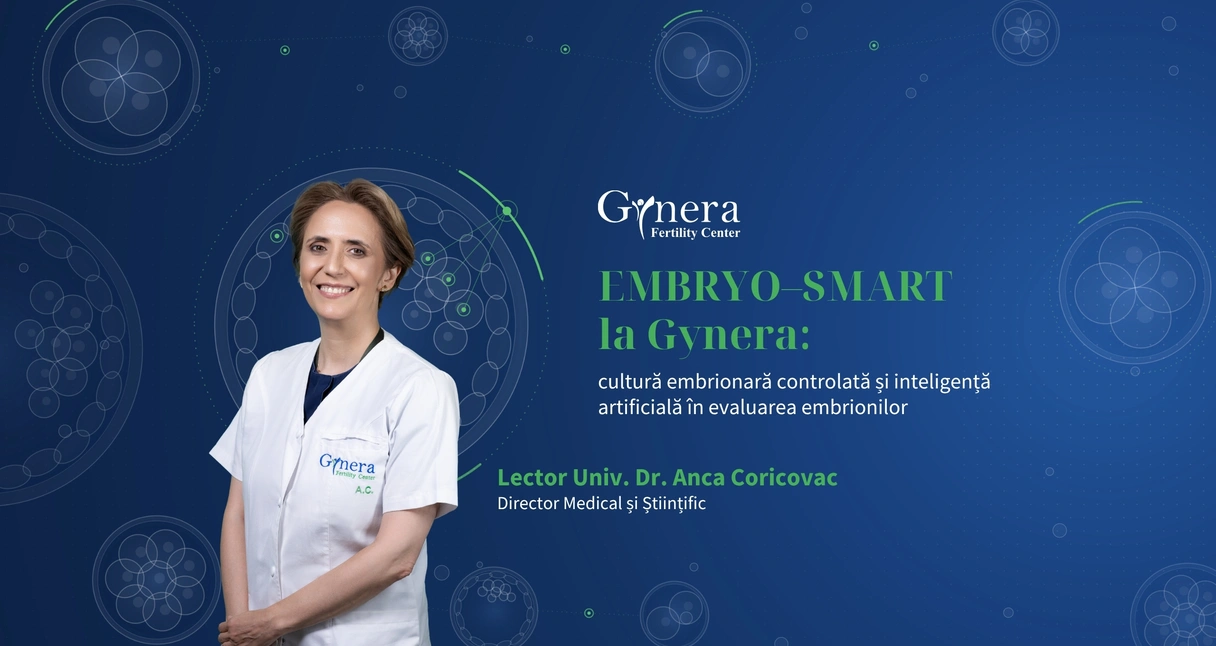
EMBRYO–SMART is the Gynera laboratory's approach to embryo development and assessment in IVF. It brings together embryo culture to the blastocyst stage (day 5–6) in incubators with a stable microenvironment, monitoring of development, including time-lapse recordings, and blastocyst assessment with artificial intelligence (Embryo Predict), to support the selection of the embryo for transfer. The AI score complements the embryologist's morphological grading: it is not a verdict on viability and does not guarantee implantation or birth.
In in vitro fertilisation, obtaining embryos is the start of a closely monitored process. Each stage of development provides important information, and choosing the embryo for transfer involves more than judging its appearance at a single point in time.
What is EMBRYO–SMART?
At Gynera, EMBRYO–SMART brings together two essential components: embryo culture under carefully controlled conditions and embryo assessment supported by artificial intelligence. Monitoring of development and the specialist's interpretation link this information into a recommendation tailored to each case.
What is a blastocyst and why does culture to day 5–6 matter?
A blastocyst is the stage an embryo usually reaches on day 5 or 6 after fertilisation: it has a fluid-filled cavity and two cell types, the inner cell mass, which develops into the fetus, and the trophectoderm, which goes on to form the placenta. Extended culture to the blastocyst stage gives the embryologist more information about the embryo's development than an assessment in the first days. We have written about the role of the embryo in successful implantation in our article on implantation failure in IVF.
Experience in blastocyst culture, documented through research
Gynera's focus on embryo development and assessment predates the current use of artificial intelligence.
The 2012 study: blastocyst (day 5) or cleavage-stage (day 2–3) embryo transfer
In 2012, together with Dr Laura Dracea, Dr Ioan Boleac and colleagues, we published the study “Blastocyst versus cleavage stage embryo transfer policy. New aspects of an ongoing debate”.
The analysis included 480 IVF cycles and looked at the embryo culture and transfer strategy, as well as the initial experience with blastocyst vitrification. Of the 2,319 embryos included in extended culture, 1,090 reached the blastocyst stage.
Our team observed that some embryos with a less favourable appearance in the first days continued to develop to the blastocyst stage, while others, apparently promising, did not complete all the stages. This observation underlines the importance of following development, alongside morphological assessment.
These results belong to a historical cohort and document the laboratory's experience; they do not represent the clinic's current rates or the results of AI assessment.
From analysing results to individualised assessment
In 2015, together with Dr Laura Dracea and Prof. Dimitrie Nanu, we published an analysis of the factors that predict success in assisted human reproduction, based on 1,121 embryo transfer cycles.
The study analysed the relationship between achieving a pregnancy and characteristics of the patient and the treatment, supporting the need to interpret results in the context of the whole case.
Another topic documented in our scientific work is cryobiology. In 2015, together with Dr Laura Dracea and embryologist Iulia Raica, we presented the paper “Vitrifying blastocysts derived from vitrified oocytes injected with frozen sperms”.
These contributions are milestones in the work on which the current development of the Gynera laboratory is built.
Embryo culture and time-lapse monitoring: continuity in a carefully controlled environment
During the five to six days of development to the blastocyst stage, the embryos are cultured in incubators designed to maintain a stable microenvironment.
Control of temperature and gas concentrations, organisation into independent compartments and rapid recovery of the parameters after the necessary handling are all intended to limit disturbances to the culture environment. The laboratory's monitoring and control procedures complement the functions of the equipment.
Time-lapse monitoring of embryos in IVF
Time-lapse recordings make it possible to review the sequence of cell divisions and the formation of the blastocyst, through images captured inside the incubator. The assessment thus includes not only the embryo's appearance but also information about the course of its development.
The stability of the culture, the documentation of development and the embryologist's experience form the foundation to which AI analysis is added.
Embryo Predict: artificial intelligence as an additional perspective for embryo selection
Embryo Predict™ Alife analyses images of blastocysts and generates scores that complement the morphological grading carried out by the embryologist.
Two blastocysts with the same morphological grade may receive different AI scores. The algorithm analyses visual features according to the same criteria, giving the specialist additional information for deciding the order of transfer.
What the AI score means and what it does not
The score is not a verdict on viability and does not represent an individual percentage chance of pregnancy. A lower score does not rule out the possibility of a birth and is not, on its own, a reason to discard an embryo.
AI supports comparative assessment. The embryologist interprets the result in the context of the embryo's development and of the whole treatment.
Human experience and technology, integrated in the same assessment
At Gynera, as Medical and Scientific Director, I work with Iulia Raica, Deputy Director of the IVF Laboratory and ESHRE-certified embryologist, and with the whole team to integrate these tools into the assessment of each case, so that decisions on embryo selection are based on as much relevant and documented information as possible.
The embryo images, the morphological grading and the AI scores can be brought together in a report that can complement the transfer recommendations and the options for cryopreserved embryos.
EMBRYO–SMART does not change the biological potential of the embryos and does not guarantee implantation or birth. It brings together culture conditions, observation and AI-assisted analysis to support an individualised and documented decision.
In cases of severe male infertility, EMBRYO–SMART continues what ICSI–SMART begins: from fertilisation to the choice of the embryo for transfer.
EMBRYO–SMART Gynera: controlled culture, monitored development and AI-assisted embryo assessment.
Frequently asked questions about blastocysts, time-lapse and AI-assisted embryo selection
Short answers to the questions patients ask us most often about embryos and the laboratory.
What is a blastocyst?
A blastocyst is the stage an embryo usually reaches on day 5 or 6 after fertilisation. It has a fluid-filled cavity and two cell types: the inner cell mass, which develops into the fetus, and the trophectoderm, which goes on to form the placenta. In IVF, embryos can be cultured in the laboratory to this stage before transfer or cryopreservation.
What is the difference between a day 3 embryo and a day 5 blastocyst?
A day 3 embryo is at the cleavage stage and consists of a few cells. A blastocyst, the stage an embryo usually reaches on day 5 or 6, already has two cell types and a fluid-filled cavity. Culture to the blastocyst stage shows which embryos continue to develop: some embryos with a less favourable appearance in the first days reach the blastocyst stage, while others, apparently promising, do not.
Do all embryos reach the blastocyst stage?
No. A proportion of embryos stop developing before day 5–6. In a historical cohort analysed by the Gynera team and published in 2012, 1,090 of the 2,319 embryos included in extended culture reached the blastocyst stage. The figures document the laboratory's experience and do not represent the clinic's current rates.
What is time-lapse monitoring in IVF?
Time-lapse monitoring means capturing images of the embryos at regular intervals inside the incubator. The embryologist can review the sequence of cell divisions and the formation of the blastocyst, so the assessment includes information about the course of development, not only the embryo's appearance at a single point in time.
How are embryos selected for transfer?
The embryologist assesses the development and morphology of each embryo and grades it. At Gynera, this information can be complemented by the scores that Embryo Predict generates from images of the blastocysts. The recommendation on the order of transfer is made in the context of the whole treatment and is explained to you by your doctor.
What does an embryo's AI score mean?
The AI score is additional information that complements morphological grading and helps to compare blastocysts. It is not a verdict on viability and does not represent an individual percentage chance of pregnancy. A lower score does not rule out the possibility of a birth and is not, on its own, a reason to discard an embryo.
How does artificial intelligence help with embryo selection?
AI supports the comparative assessment of embryos: Embryo Predict analyses images of the blastocysts and generates scores that complement morphological grading. It does not replace the embryologist, who interprets the result in the context of the embryo's development and of the whole treatment. The decision about the transfer remains an individualised medical one.
Does EMBRYO–SMART guarantee implantation?
No. EMBRYO–SMART does not change the biological potential of the embryos and does not guarantee implantation or birth. It brings together culture conditions, observation and AI-assisted analysis to support an individualised and documented decision about the embryo chosen for transfer.
Do you have questions about your embryos or about IVF treatment? The Gynera team explains each laboratory step and what the results mean in your case. Book a consultation or find out more about fertility testing.
Sources
- Blastocyst versus cleavage stage embryo transfer policy. New aspects of an ongoing debate. Dracea L, Codreanu D, Coricovac A, Mirzan L, Boleac I. Gineco.eu. 2012;8(4):175–180.
- Factori de predicție ai succesului în procedurile de reproducere umană asistată (Predictive factors of success in assisted human reproduction procedures). Coricovac A, Nanu D, Dracea L. Revista Medicală Română. 2015;62(3):229–236. DOI: 10.37897/RMJ.2015.3.3.
- Vitrifying blastocysts derived from vitrified oocytes injected with frozen sperms. Dracea L, Raica I, Coricovac A. Poster presented at the Bucharest Embryology Symposium: Innovation in Reproductive Medicine, November 2015, Bucharest, Romania.
Author: Dr Anca Coricovac, University Lecturer, Medical and Scientific Director, Gynera Fertility Clinic · Last updated: 2026-11-11.
This article is the intellectual property of Gynera. Any copying, reproduction, distribution, or publication of the content, in whole or in part, is permitted only with the prior written consent of Gynera Clinic and with proper attribution to the source.

Dr. Anca Coricovac, MD, PhD
Senior Consultant Obstetrician & Gynecologist, Specialist in IVF and Assisted Human ReproductionBlastocyst
The stage an embryo usually reaches on day 5 or 6 after fertilisation. It has a fluid-filled cavity and two types of cells: the inner cell mass and the trophectoderm.
Cleavage-stage embryo
The embryo in the first days after fertilisation (day 2–3), made up of a few dividing cells, before it reaches the blastocyst stage.
Inner cell mass
The group of cells inside the blastocyst from which the fetus develops.
Trophectoderm
The outer layer of cells of the blastocyst, from which the placenta forms.
Extended embryo culture
Culturing embryos in the laboratory up to day 5–6, the blastocyst stage, instead of transferring them on day 2–3.
Time-lapse monitoring
Capturing images of the embryos at regular intervals inside the incubator, without removing them from the culture environment. The embryologist can review the sequence of cell divisions and the formation of the blastocyst.
Incubator
The equipment in which embryos are cultured in the laboratory, with controlled temperature and gas concentrations, to maintain a stable microenvironment.
Morphological grading
The embryologist's assessment of the embryo based on its appearance under the microscope, according to standardised criteria (for example, the degree of blastocyst expansion and the quality of the cells).
Embryo Predict
An artificial intelligence system that analyses images of blastocysts and generates scores that complement the morphological grading carried out by the embryologist.
AI score
A numerical result that helps compare blastocysts. It is not a verdict on viability and does not represent the individual chance of pregnancy.
Embryo transfer
The stage of IVF in which the chosen embryo is placed in the uterus.