Gynera's experience with total globozoospermia, retrograde ejaculation and the use of sperm from difficult samples is complemented by SpermSearch.AI™, the technology that supports the microscopic identification of rare sperm.
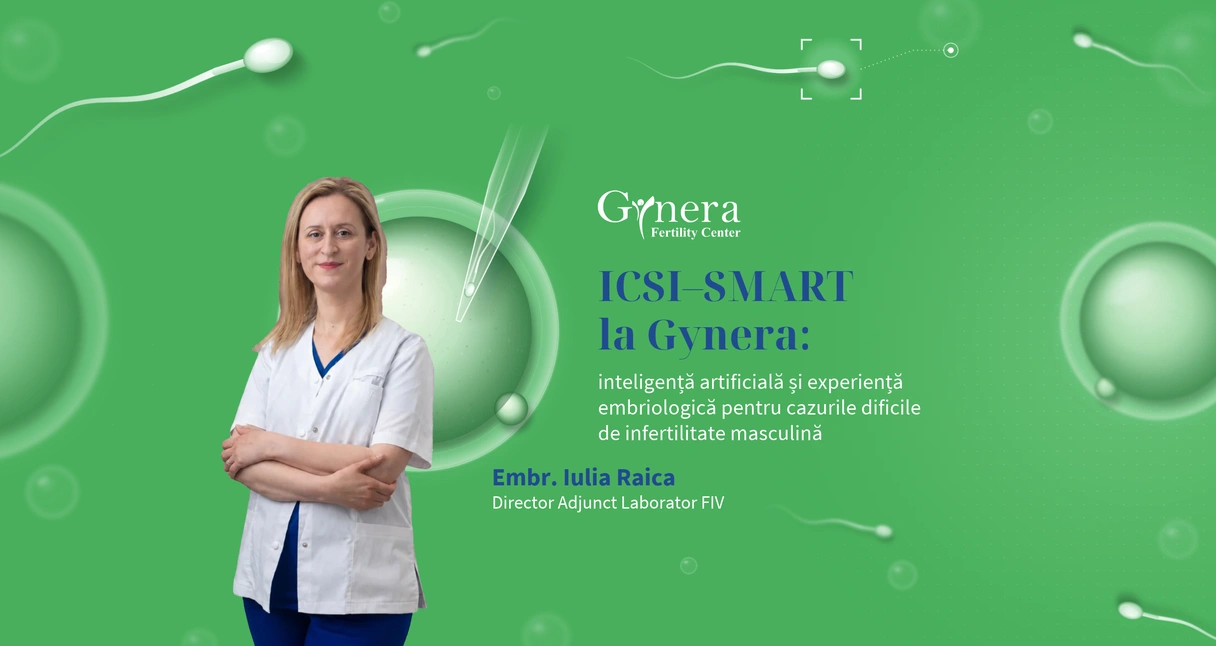
ICSI–SMART is Gynera's approach to severe male infertility, as part of IVF. It combines ICSI (the injection of a single sperm into the egg), the identification of rare sperm with the help of artificial intelligence (SpermSearch.AI) and, when medically indicated, additional interventions such as assisted oocyte activation. It may be considered in situations such as cryptozoospermia, severe oligoasthenozoospermia or severe teratozoospermia (including globozoospermia). The clinic's experience also includes ICSI with sperm recovered from urine in retrograde ejaculation. AI assists the search; the embryologist assesses, selects and performs the ICSI.
In severe male infertility, the challenges differ from one patient to another. Sometimes there are extremely few sperm and they are hard to identify. At other times, reduced motility or significant defects in structure and function make fertilisation difficult.
At Gynera, the management of these cases is based on close collaboration between the fertility specialist, the urologist, and the embryologist. Together with our multidisciplinary team, we evaluate each case individually and develop the most appropriate treatment strategy, tailored to the specific needs of each couple.
What is ICSI–SMART?
ICSI–SMART is the name of Gynera's approach that combines ICSI with sperm identification assisted by artificial intelligence, using SpermSearch.AI™, and with additional interventions when there is a medical indication.
What is ICSI in IVF?
ICSI (intracytoplasmic sperm injection) is the laboratory technique in which the embryologist injects a single sperm directly into the egg. It is the fertilisation method used in IVF when the number, motility or shape of the sperm makes conventional fertilisation unlikely. Read more about egg fertilisation by ICSI.
When ICSI–SMART is used: cryptozoospermia, severe oligoasthenozoospermia and other severe forms of male infertility
Severe male infertility is usually identified through a semen analysis and other male fertility tests. ICSI–SMART can be considered in situations such as:
- Cryptozoospermia: no sperm seen on routine examination of the sample; a few are found only after centrifugation and an extended search under the microscope.
- Severe oligoasthenozoospermia: a very low sperm count with reduced motility.
- Severe teratozoospermia, including globozoospermia: significant defects in sperm shape; in globozoospermia the sperm have a round head and no acrosome.
- Certain samples obtained by testicular sperm retrieval, which may contain very few sperm.
These situations do not all require the same interventions: the approach is decided case by case, as part of in vitro fertilisation (IVF) treatment, after both partners have been assessed. Gynera's experience in severe male infertility also includes retrograde ejaculation, described below.
Total globozoospermia: from diagnosis to the birth of a child
Total globozoospermia is a rare and severe form of teratozoospermia in which the sperm have a round head and lack an acrosome. As well as being unable to penetrate the egg naturally, the sperm may also be deficient in their ability to activate it. For this reason, injecting the sperm by ICSI may need to be combined with assisted oocyte activation.
The case published in 2022: ICSI with assisted oocyte activation
At Gynera, we documented this approach in a case published in 2022 in the Romanian Journal of Morphology and Embryology, together with Dr Anca Coricovac and other colleagues. In this case we combined techniques such as microfluidic sperm selection, ICSI and assisted oocyte activation with a calcium ionophore, to adapt the treatment to the particular features of the case and optimise the chances of success.
Eighteen eggs were collected, of which 14 were mature and were injected by ICSI. Two eggs fertilised normally, and both embryos reached the blastocyst stage and were vitrified. The subsequent transfer of one blastocyst led to the birth of a healthy child.
The result shows what can become possible in a carefully assessed case, without being a guarantee for all couples with the same diagnosis.
A second case of globozoospermia, treated with ICSI–SMART
A second, recent case of total globozoospermia, treated at Gynera with ICSI–SMART (ICSI with AI-assisted sperm identification, using SpermSearch.AI™), adds to the clinic's experience of managing severe male infertility.
The procedure was combined with assisted oocyte activation, in line with the particular features of the diagnosis.
Of 15 eggs collected, 12 were mature, four fertilised and two blastocysts were obtained and subsequently cryopreserved.
The two components have different roles: AI supports the identification of sperm, while oocyte activation aims to overcome the functional difficulty associated with globozoospermia. The result reported for this case is that blastocysts were obtained; pregnancy and birth are separate stages.
Retrograde ejaculation and fertility: recovering sperm from urine
In retrograde ejaculation, semen passes into the bladder instead of leaving through the urethra, so little or no semen is ejaculated. Sperm may still be present in the urine passed after ejaculation.
Our experience also includes a case of retrograde ejaculation, published in 2020 in the Journal of Contemporary Clinical Practice, which I wrote together with Dr Anca Coricovac as the first two authors of the study.
The sperm were recovered from post-ejaculatory urine, after the patient had been prepared, and then processed for use in ICSI.
Eight eggs were collected, of which seven were mature. Six fertilised normally. After embryo transfer, a pregnancy was achieved that ended with the birth of a healthy child.
This case predates the introduction of artificial intelligence and highlights the importance of collaboration between the urologist and the embryology laboratory in finding a treatment option that allows the patient's own sperm to be used.
What does artificial intelligence bring to ICSI–SMART?
SpermSearch.AI™ analyses microscope images in real time and highlights structures that could be sperm. The embryologist checks each candidate and decides whether it can be used for injection.
This support can be relevant in cryptozoospermia, severe oligoasthenozoospermia and certain samples obtained by testicular sperm retrieval. In complex cases of teratozoospermia or globozoospermia, its use depends on how difficult the cells are to identify and on the particular features of the sample.
What artificial intelligence can and cannot do
AI assists the search. The embryologist carries out the assessment, the selection and the ICSI. The technology does not repair sperm defects, does not directly establish DNA integrity and does not replace the procedures needed for an oocyte activation deficiency.
ICSI–SMART does not mean applying the same interventions to every patient, but integrating the right tools into an individualised plan.
The team's clinical and laboratory experience, documented among other things by its scientific contributions, is thus complemented by new tools for identification and analysis.
For couples with a severe male factor, the aim is to identify a realistic treatment option with the patient's own sperm, when this is achievable: through experience, technology and teamwork.
Frequently asked questions about ICSI–SMART and severe male infertility
Short answers to the questions we hear most often from couples with a severe male factor.
What is ICSI and when is it recommended in IVF?
ICSI (intracytoplasmic sperm injection) is the laboratory technique in which the embryologist injects a single sperm directly into the egg. In IVF it is used when the number, motility or shape of the sperm makes conventional fertilisation unlikely, for example in severe male infertility.
What is ICSI–SMART?
ICSI–SMART is the name of Gynera's approach to difficult cases of male infertility. It combines ICSI, the injection of a single sperm into the egg, with AI-assisted sperm identification (SpermSearch.AI) and with additional interventions, such as assisted oocyte activation, when there is a medical indication.
What does cryptozoospermia mean and what are the options?
Cryptozoospermia means that no sperm are seen on routine examination of the sample and a very small number are found only after centrifugation and an extended search under the microscope. In these cases ICSI allows the sperm that are found to be used, and SpermSearch.AI can support the embryologist in finding them. The strategy is decided case by case, together with the assisted reproduction specialist, the urologist and the embryologist.
Retrograde ejaculation: is pregnancy possible?
Yes, in some cases. Sperm can be recovered from the urine passed after ejaculation, once the patient has been prepared, then processed in the laboratory and used for ICSI. At Gynera, one such case, published in 2020, ended with the birth of a healthy child. Each situation needs an individual assessment.
What is assisted oocyte activation?
Assisted oocyte activation is a laboratory procedure combined with ICSI when the sperm cannot trigger activation of the egg on its own, for example in globozoospermia. In the case published by the Gynera team, a calcium ionophore was used. The procedure is recommended only when there is a medical indication.
Does artificial intelligence choose the sperm for ICSI?
No. SpermSearch.AI analyses microscope images in real time and highlights structures that could be sperm. The embryologist checks each candidate and carries out the assessment, the selection and the ICSI. The technology does not repair sperm defects and does not directly establish DNA integrity.
Does ICSI–SMART guarantee a pregnancy?
No. No fertility treatment can guarantee a pregnancy. ICSI–SMART aims to identify a realistic treatment option with the patient's own sperm, when this is achievable. Fertilisation, obtaining blastocysts, pregnancy and birth are separate stages, and the outcome depends on each couple's particular situation.
Have you been diagnosed with severe male infertility? At Gynera, the urologist, the assisted reproduction specialist and the embryologist review each case together. Book a consultation or find out more about fertility testing.
Sources
- Healthy birth in a case of total globozoospermia after intracytoplasmic sperm injection and assisted oocyte activation. With contributions from Coricovac AM, Raica II et al. Romanian Journal of Morphology and Embryology. 2022;63(2):459–463. DOI: 10.47162/RJME.63.2.17
- Healthy child conceived with the aid of assisted reproduction techniques using sperm cells from the urine of a man with retrograde ejaculation: a case report. Coricovac A, Raica I et al. Journal of Contemporary Clinical Practice. 2020;6(2):92–96.
Author: Iulia Raica, senior clinical embryologist, ESHRE certified, Gynera Fertility Clinic · Medically reviewed by Dr Anca Coricovac, Medical and Scientific Director, Gynera Fertility Clinic · Last updated: 2026-11-11.
This article is the intellectual property of Gynera. Any copying, reproduction, distribution, or publication of the content, in whole or in part, is permitted only with the prior written consent of Gynera Clinic and with proper attribution to the source.

Embr. Iulia Raica
ESHRE Member, OBBCBCSSR Member, Specialization: Fertility Center Kinderwunschzentrum GoldenessKreutz Private Clinic, Vienna, Austria; ESHRE Course Choosing and using embryos: novel approaches to embryo selection, Krakow, ESHRE PGT Consortium SeminarICSI (intracytoplasmic sperm injection)
The laboratory technique in which the embryologist injects a single sperm directly into the egg to achieve fertilisation.
Severe male infertility
A situation in which the number, motility or shape of the sperm is affected so much that conventional fertilisation is unlikely.
Semen analysis
The basic test of male fertility, which assesses the ejaculate volume and the concentration, motility and morphology of the sperm.
Cryptozoospermia
A situation in which no sperm are seen on routine examination of the sample and they are found, in very small numbers, only after centrifugation and an extended search under the microscope.
Oligoasthenozoospermia
The combination of a low sperm count (oligozoospermia) and reduced sperm motility (asthenozoospermia).
Teratozoospermia
A situation in which a large proportion of the sperm have shape defects.
Globozoospermia
A rare and severe form of teratozoospermia in which the sperm have a round head and no acrosome.
Acrosome
The structure in the sperm head that contains the enzymes needed to penetrate the layers surrounding the egg.
Assisted oocyte activation
A laboratory procedure combined with ICSI when the sperm cannot trigger activation of the egg on its own, for example in globozoospermia.