“Never will a time come when the most marvellous recent invention is as marvellous as a newborn baby.” Carl Sandburg
For many couples, in vitro fertilization (IVF) is an emotionally charged journey, filled with hope but also, at times, fear, exhaustion, and impatience. Throughout this process, every decision matters—from nutrition, physical activity, stress management, and sleep, to dietary supplements that may support treatment success.
In an era of information overload, the natural question arises: which recommendations regarding nutritional supplements are truly supported by scientific evidence?
A recent answer came in 2024, when a group of researchers published one of the most rigorous meta-analyses on the role of nutritional supplements in IVF in Reproductive BioMedicine Online. This analysis pooled data from multiple clinical studies, evaluating the impact of diet and macro- and micronutrients on oocyte quality, fertilization rates, implantation, and live birth outcomes.
The findings are nuanced: some supplements appear beneficial, others are promising but require further clinical data, while some currently lack convincing evidence. Below, we explore the key conclusions of this analysis to help future parents make informed decisions.
1. The Mediterranean Diet – The Biological Foundation of Fertility
Nutrition specialists consistently emphasize that dietary patterns matter more than individual supplements. Before introducing any supplementation, the first step should be improving overall dietary quality.
Numerous studies confirm that a Mediterranean-style diet—rich in fresh fruits and vegetables, whole grains, legumes, fish, olive oil, nuts, and seeds—supports reproductive health. This dietary pattern provides antioxidants, healthy fats, and essential micronutrients, reducing low-grade systemic inflammation and oxidative stress, both of which can negatively affect oocyte quality and embryo implantation.
The RBMO meta-analysis associated adherence to the Mediterranean diet with improved oocyte quality, enhanced endometrial receptivity, and higher clinical pregnancy rates.
Recommendation: Gradual adoption at least 2–3 months before IVF treatment.
2. Coenzyme Q10 – The Energy Source of Oocytes
As women age, mitochondrial activity within oocytes declines. Since mitochondria are responsible for cellular energy production, reduced efficiency directly impacts oocyte quality.
Coenzyme Q10 (CoQ10) supports mitochondrial function and reduces oxidative stress. Studies show that supplementation (200–600 mg/day for 2–3 months before treatment) is associated with an increased number of mature oocytes and improved embryo quality, particularly in women over 35 or with diminished ovarian response.
While effects on live birth rates vary, CoQ10 appears to improve the biological environment for fertility.
3. Melatonin – Nighttime Protection for Oocytes
Known primarily for regulating sleep, melatonin is also a powerful antioxidant. Within the ovaries, it protects oocytes from oxidative damage during maturation.
The meta-analysis suggests that melatonin supplementation (3–6 mg/day) may improve oocyte and embryo quality, although effects on pregnancy and live birth rates are still under investigation. It may be particularly helpful for women experiencing sleep disturbances, high stress levels, or prolonged exposure to artificial light.
4. DHEA – A Hormonal Option for Low Ovarian Reserve
Dehydroepiandrosterone (DHEA) is an adrenal hormone and precursor of estrogens and androgens. In selected cases, it may support follicular development and improve ovarian response, especially in women with low ovarian reserve.
Study results remain mixed, and DHEA should only be used under medical supervision following a full hormonal evaluation.
5. Myo-Inositol – Regulating Ovarian Metabolism
Myo-inositol is well documented in patients with polycystic ovary syndrome (PCOS). It improves insulin sensitivity, supports ovulation, and enhances oocyte quality.
According to the meta-analysis, supplementation of 4 g/day for at least two months may increase fertilization rates, reduce the risk of ovarian hyperstimulation, and improve embryo parameters.
6. Vitamin D – A Key Micronutrient for Fertility
Vitamin D plays a crucial role in hormonal balance and endometrial receptivity. Deficiency is common and associated with lower pregnancy rates and poorer oocyte quality.
Daily supplementation (1,000–4,000 IU, adjusted according to blood levels) can restore optimal values and, in some studies, has been linked to significantly improved IVF outcomes.
7. Omega-3 Fatty Acids – Essential Fats for Life
Omega-3 fatty acids (EPA and DHA) regulate inflammation, support cell membrane formation, and contribute to embryo development. Higher intake has been associated with better oocyte quality and higher implantation rates.
Sources include fatty fish or purified fish oil supplements; vegetarian alternatives derived from algae are also available.
Conclusion
Fertility reflects a complex balance between physiology, hormones, nutrition, and emotional well-being. Its optimization requires a multimodal, personalized approach.
Supplements can help correct deficiencies and support health, but they cannot replace a balanced diet or other medical and lifestyle interventions. The strongest evidence supports a combined approach involving:
- Mediterranean diet
- Coenzyme Q10
- Melatonin (in selected cases)
- Myo-inositol (for PCOS)
- Vitamin D (when deficient)
- Omega-3 fatty acids
Each individual responds differently, and any supplementation plan should be developed collaboratively with the treating physician and a fertility nutrition specialist.
Source: Nutritional Supplements and IVF: An Evidence-Based Approach, Roger J. Hart, Reproductive BioMedicine Online, 2024.

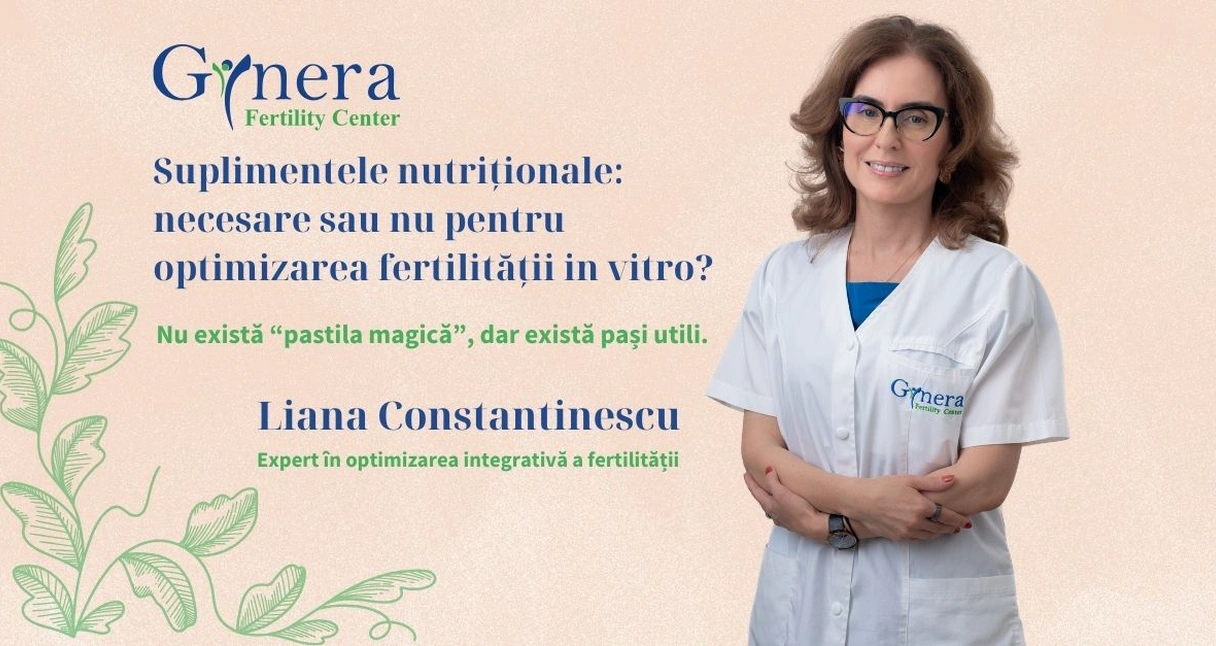
Liana Constantinescu
Specialist in Functional Nutrition and Reproductive Health CoachingMeta-analysis
A study that combines the results of several clinical studies on the same question to reach a more reliable overall conclusion.
Mediterranean diet
A dietary pattern based on vegetables, fruit, whole grains, legumes, fish, olive oil, nuts and seeds, with limited red meat and processed foods.
Oxidative stress
An imbalance between harmful reactive molecules (free radicals) and the body’s antioxidant defenses. It can damage cells, including eggs and sperm.
Mitochondria
Structures inside cells that produce energy. Eggs contain large numbers of mitochondria, and their efficiency declines with age.
Oocyte
The medical term for an egg cell.
Coenzyme Q10 (CoQ10)
A compound naturally produced by the body that supports energy production in mitochondria and acts as an antioxidant.
Melatonin
A hormone that regulates the sleep–wake cycle. It also acts as an antioxidant, including in the ovaries.
Dehydroepiandrosterone (DHEA)
A hormone produced mainly by the adrenal glands, which the body converts into androgens and estrogens. It should only be taken under medical supervision.
Ovarian reserve
The number of eggs remaining in the ovaries. It is usually assessed with an AMH blood test and an ultrasound count of antral follicles.
Polycystic ovary syndrome (PCOS)
A common hormonal condition that can cause irregular or absent ovulation, higher androgen levels and insulin resistance.
Myo-inositol
A naturally occurring compound involved in insulin signaling. It is often used as a supplement for women with PCOS.
Insulin sensitivity
How effectively the body’s cells respond to insulin. Reduced sensitivity (insulin resistance) can disrupt ovulation.
Ovarian hyperstimulation syndrome (OHSS)
An excessive response of the ovaries to fertility medication, which can cause swelling, abdominal pain and fluid retention.
Endometrial receptivity
The ability of the uterine lining to allow an embryo to attach and implant.
Omega-3 fatty acids (EPA and DHA)
Essential fats found mainly in oily fish and algae, involved in cell membrane structure and the regulation of inflammation.