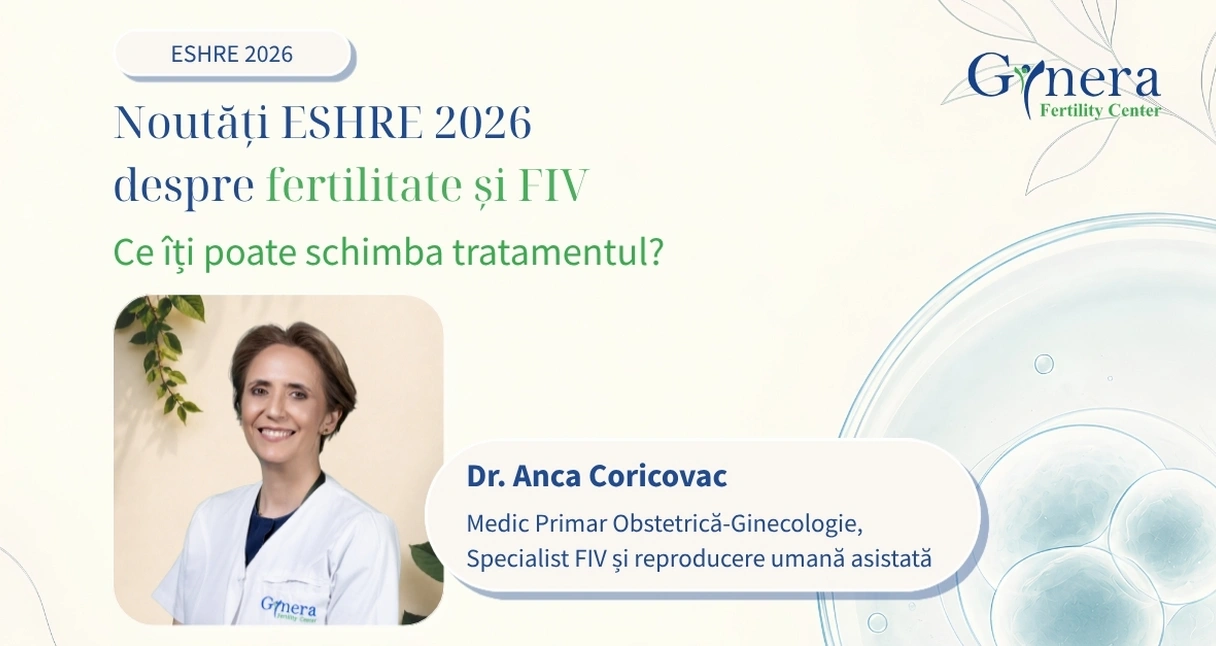
IVF success rates continue to improve, while treatments are becoming safer and more precisely tailored to each patient. The most important findings focused on single-embryo transfer, the cumulative chance of achieving a live birth, artificial intelligence, and the role of both partners in fertility.
I selected the information presented at ESHRE 2026 that may have a direct impact on patients and couples facing decisions about fertility or IVF. For each topic, I have also indicated what is already useful in clinical practice and what, for now, remains a direction for future research.
In brief: What does this mean for you?
- Higher live birth rates with modern IVF: Success should not be assessed based solely on the first embryo transfer.
- A single embryo in over 95% of procedures: A good chance of success, with a significantly lower risk of twin pregnancy.
- Frozen embryos are part of your overall chance of success: They are included in your cycle’s overall chance of success.
- Artificial Intelligence as a support tool: It can support the embryologist’s work, but it cannot guarantee implantation.
- Age matters even in egg donation: A young egg does not completely eliminate the effects of age.
- Male Fertility, assessed just as carefully: Environmental factors can affect sperm DNA.
- Access to treatment is part of your chance of success: Being able to continue treatment matters.
Can a single embryo still offer a very good chance of success?
Yes—and it is one of the most important conclusions from ESHRE 2026.
A large study analysed the outcomes of 18,396 women starting their first IVF treatment at seven clinics in Australia. After up to three treatment cycles:
- 68.2% cumulative live birth rate
- 95.3% single-embryo procedures
- 2.9% multiple births
The chances varied considerably depending on the woman’s age:
- Under 35 years: 84.5%
- 35–37 years: 74.4%
- 38–40 years: 57.7%
- 41–42 years: 30.1%
The percentages do not represent the chance of success after a single transfer, but rather the outcome achieved through the successive use of the available eggs and embryos over a maximum of three treatment cycles. This is why we distinguish between the chance after the first transfer, the chance after each subsequent transfer, and the cumulative chance of success across the entire treatment.
Key takeaway
Transferring a single embryo does not automatically mean a lower chance of success. It may offer the same overall path to having a baby, while significantly reducing the risk of a twin pregnancy.
The study is observational, so its findings may not apply in the same way to every patient. Nevertheless, it shows how much blastocyst culture, vitrification, and successive embryo transfers have contributed to the outcomes achieved with modern IVF.
Why do frozen embryos matter so much?
Because the first transfer does not always represent your full chance of success.
Preliminary European data presented at ESHRE 2026 included 1,473 centres across 36 countries. For 2023, the following were reported:
- 1.15 million assisted reproduction cycles
- 247,021 babies born
- ~43% frozen embryo transfers
At the same time, the lowest rates of twin and triplet births since ESHRE began European monitoring were recorded. When several embryos are obtained from one stimulation cycle, the frozen embryos can be transferred at a later stage without the need for another egg retrieval procedure. Therefore, the remaining embryos:
- contribute to the overall chance of success from that cycle;
- make single-embryo transfer possible;
- reduce the need to repeat ovarian stimulation immediately;
- can be used at a more medically appropriate time.
The data do not demonstrate that frozen embryo transfer is superior in every situation. Success rates depend on age, embryo quality, the medical indication, and endometrial preparation.
Key takeaway
Frozen embryos are not “leftover chances.” They are an important part of your reproductive strategy.
Can AI select the embryo that will become a baby?
It can assist with embryo assessment, but it cannot predict a live birth with certainty.
AI played a prominent role at ESHRE 2026, not only in embryo selection but also across several stages of the IVF laboratory process: oocyte assessment, estimating the number of oocytes needed for fertility preservation, laboratory quality monitoring, and semi-automated vitrification.
What can AI do now:
- standardises assessment
- reduces variability between evaluators
- classifies oocytes and embryos
- identifies patterns that are difficult to detect
- estimates probabilities
What can it not do:
- predict which oocyte will develop into a healthy embryo
- predict which embryo will implant
- predict which transfer will result in a live birth
- determine whether or not you will have a child
An algorithm calculates a probability based on the data it was trained on, and its output may be influenced by the population studied, the type of incubator used, and the laboratory protocols. In 2026, ESHRE dedicated an entire course to the critical evaluation and responsible implementation of AI.
Key takeaway
For you, AI should be an additional tool—highly valuable when used by the medical and embryology team.
Does age still matter when the egg is donated?
Yes. A young donor egg reduces the effect of age on the embryo, but it does not change the age of the body that will carry the pregnancy.
A study presented at ESHRE 2026 showed that outcomes of treatments using donor eggs began to decline in patients aged 49 and older, with a higher rate of pregnancy loss in this group.
- 46.2% live birth rate at ages 35–40
- 31.7% live birth rate at age 49 and older
Key takeaway
A young egg benefits the embryo, but the age at which you carry the pregnancy remains an important factor. The decision should be made on an individual basis, taking your overall health into account.
Does a man’s living environment matter?
It can affect sperm cells at a level that a standard semen analysis does not measure.
The studies presented raise the possibility that environmental exposures may be associated with changes in sperm DNA. However, they do not demonstrate that pollution directly causes infertility, pregnancy loss, embryo abnormalities, or health problems in the child. These findings need to be confirmed and correlated with real clinical outcomes.
Key takeaway
Fertility assessment should begin with both partners, not only the woman.
What role do smoking and body weight play?
They matter, but neither alone explains every fertility problem.
A prospective study compared semen quality in 386 men from four regions of Spain, taking into account body mass index, smoking, alcohol consumption, physical activity, and chemical exposures. The substantial regional differences were not fully explained by the lifestyle factors measured.
The discussion about body weight and smoking should focus on practical questions:
- Are there ovulation disorders or insulin resistance?
- Is there hypertension, diabetes, or an increased anaesthetic risk?
- Can smoking be reduced or stopped before treatment?
- Can overall health be improved without unnecessarily delaying treatment?
Key takeaway
You do not need to become a “perfect” version of yourself before your consultation. Together, we identify what can be improved and how much reproductive time is available.
Why does treatment funding matter?
Because the real chance of success also depends on being able to continue treatment.
An international study involving 22 countries and regions used the concept of the “cost to achieve a live birth,” which includes not only the price of a single procedure, but also the estimated number of cycles, embryo transfers, medication, and genetic testing.
Halving the out-of-pocket costs borne by patients was associated with a 2.67-fold increase in the number of births achieved through assisted reproduction. Therefore, any public funding policy is an important form of support and helps reduce the financial burden on patients.
The study does not show that funding improves embryo quality biologically, but rather that affordability influences whether a couple can start treatment, continue after an unsuccessful outcome, use their frozen embryos, and complete the full recommended treatment strategy.
Key takeaway
In fertility treatment, access to care can itself become part of the chance of having a child.
What remains important after ESHRE 2026?
The Congress did not present a procedure that guarantees success. However, it provided data that reinforce an important shift in reproductive medicine:
- we focus on the cumulative live birth rate, not only the first transfer;
- we transfer a single embryo to support a safer pregnancy;
- we include frozen embryos in the complete treatment strategy;
- we use artificial intelligence as a support tool, not as a final verdict;
- we consider the patient’s age beyond embryo quality alone;
- we assess the fertility of both partners;
- we view access to treatment as part of the final outcome.
Conclusion
The truly important advance is not the most spectacular technology, but the ability to select more precisely the treatment that offers you the best balance between success and safety. During the consultation, the right question is not, “What is the newest procedure?” but rather, “What evidence do we have that this procedure is useful for me?”
Data sources
This article is based on studies and data presented at the 42nd Annual Meeting of ESHRE (London, 5–8 July 2026), the official scientific programme, ESHRE communications published in Focus on Reproduction, and abstracts published in the Human Reproduction supplement.
Note on interpretation: Some of the findings come from observational or retrospective studies, or from abstracts that have not yet been published in full. They may indicate directions for future research, but they do not always establish causality and do not automatically change medical recommendations.

Dr. Anca Coricovac, MD, PhD
Senior Consultant Obstetrician & Gynecologist, Specialist in IVF and Assisted Human ReproductionESHRE
The European Society of Human Reproduction and Embryology, a professional organisation that supports research, education and clinical practice in reproductive medicine.
Assisted reproductive technology (ART)
Fertility treatments in which eggs, sperm or embryos are handled outside the body. These include IVF, ICSI and frozen embryo transfer.
Cumulative live birth rate
The overall chance of achieving at least one live birth after all eligible embryo transfers within a defined number of treatment cycles, rather than after only the first transfer.
Single embryo transfer (SET)
A procedure in which one embryo is transferred to the uterus. It reduces the risk of twins or other multiple pregnancies while maintaining a good cumulative chance of success for suitable patients.
Multiple pregnancy
A pregnancy involving more than one fetus, such as twins or triplets. Multiple pregnancies carry greater health risks for both the pregnant patient and the babies.
Blastocyst
An embryo that has developed for approximately five to six days after fertilisation. At this stage, it may be selected for transfer, genetic testing or freezing.
Blastocyst culture
The process of growing embryos in the laboratory until they reach the blastocyst stage, usually five to six days after fertilisation.
Vitrification
A rapid freezing method used to cryopreserve eggs and embryos. The process limits the formation of ice crystals that could damage the cells.
Frozen embryo transfer (FET)
A procedure in which a previously frozen embryo is thawed and transferred to the uterus during a later treatment cycle.
Ovarian stimulation
The use of fertility medication to encourage the ovaries to develop several follicles and eggs during an IVF cycle.
Oocyte retrieval
A procedure in which mature eggs are collected from the ovaries for fertilisation or fertility preservation. It is also known as egg retrieval.
Implantation
The process by which an embryo attaches to the lining of the uterus and begins to develop.
IVF with donated eggs
An IVF treatment in which eggs provided by a donor are fertilised with sperm in a laboratory before an embryo is transferred to the recipient’s uterus.
AI-assisted embryo assessment
The use of artificial intelligence to analyse images or data and support the evaluation of embryos. It can estimate probabilities and assist embryologists, but it cannot guarantee implantation or a live birth.
Cost to achieve a live birth
A health-economic measure that estimates the total treatment cost associated with achieving a live birth, potentially including several treatment cycles, embryo transfers, medication and additional procedures.